Mission System: How can combat vehicles be transformed into advanced digital platforms?
Indra’s Mission System integrates and manages information from cameras, sensors and a wide range of other onboard systems
7 reading time
EIn a modern combat vehicle, it is no longer enough to have greater protection, more firepower or enhanced mobility. The real differentiator on the battlefield lies in the ability to manage information in real time and turn it into rapid, accurate decisions.
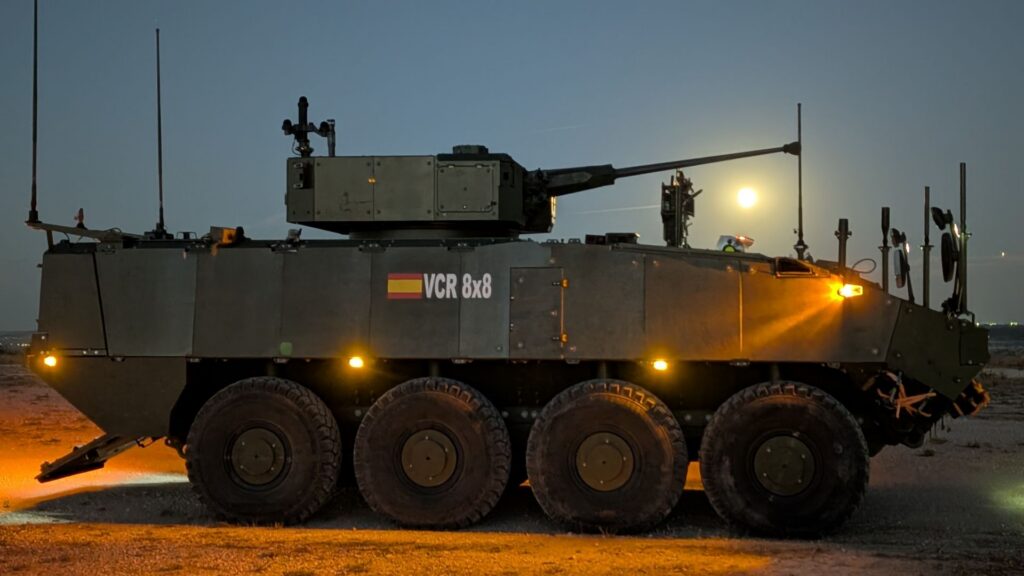
This is where Indra’s mission system comes into play. Originally developed for the Army’s 8x8 Dragón armoured vehicles and the future Tracked Support Vehicles (VAC), it operates under NATO standards (STANAG 4745 / NGVA) and acts as the vehicle’s digital assistant, becoming one of the key components in the digitalisation of Spain’s land forces.
What does a mission system actually do?
Although it often goes unnoticed when compared with more visible elements such as weapon stations or sensors, the mission system is the core that connects and coordinates everything happening both inside and outside the vehicle.
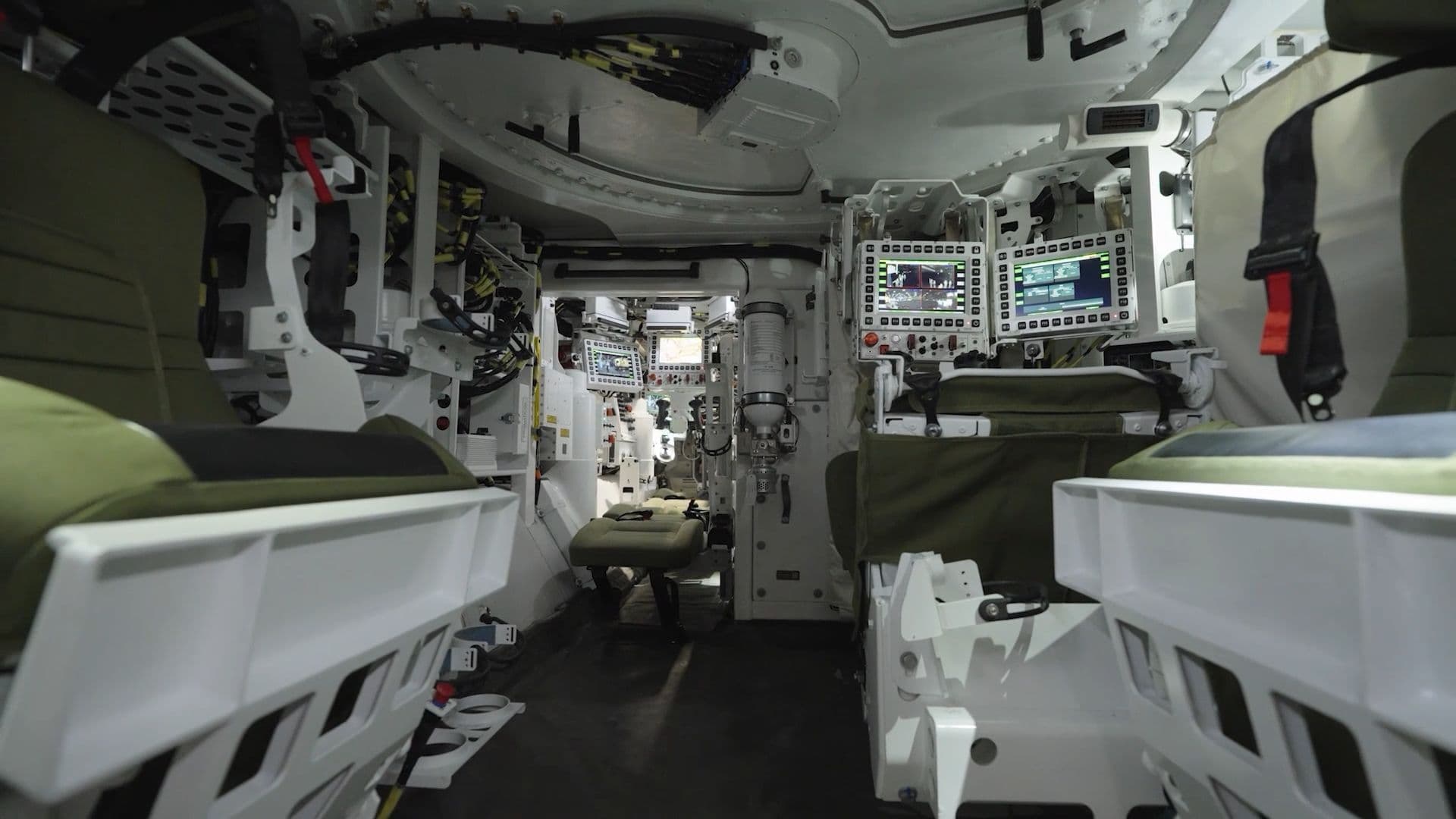
Indra’s Mission System integrates and manages information from cameras, sensors, communications systems, navigation equipment, warning systems, self-protection systems and weapon systems, presenting it clearly and coherently to the crew. Its objective is to reduce operators’ cognitive workload and facilitate rapid decision-making, even in high-pressure scenarios.
At Indra, we define this system as the element that transforms combat vehicles into intelligent, connected platforms capable of operating in complex digital environments. This is a concept that will become increasingly important in future multi-domain operational scenarios. The key is not simply having access to more information, but rather being able to convert it into useful knowledge within seconds. This capability delivers sovereignty and control over data, ensuring maximum reliability and trust throughout a complex decision-making chain, where every millisecond can be critical.
Indra’s Mission System integrates and manages information from cameras, sensors, communications systems, navigation equipment, warning systems, self-protection systems and weapon systems, presenting it clearly and coherently to the crew. Its objective is to reduce operators’ cognitive workload and facilitate rapid decision-making, even in the most demanding operational scenarios.
Comprehensive situational awareness
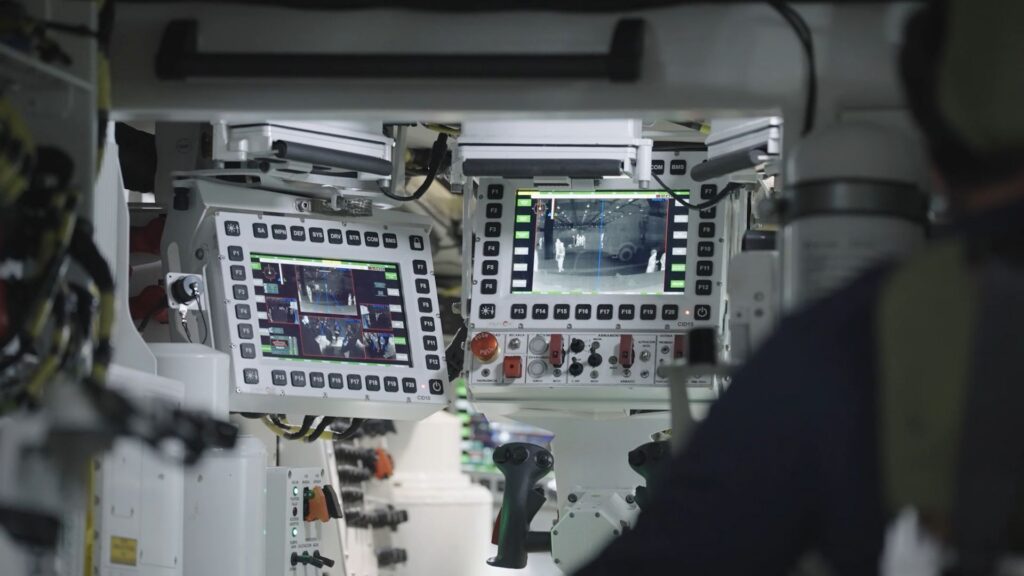
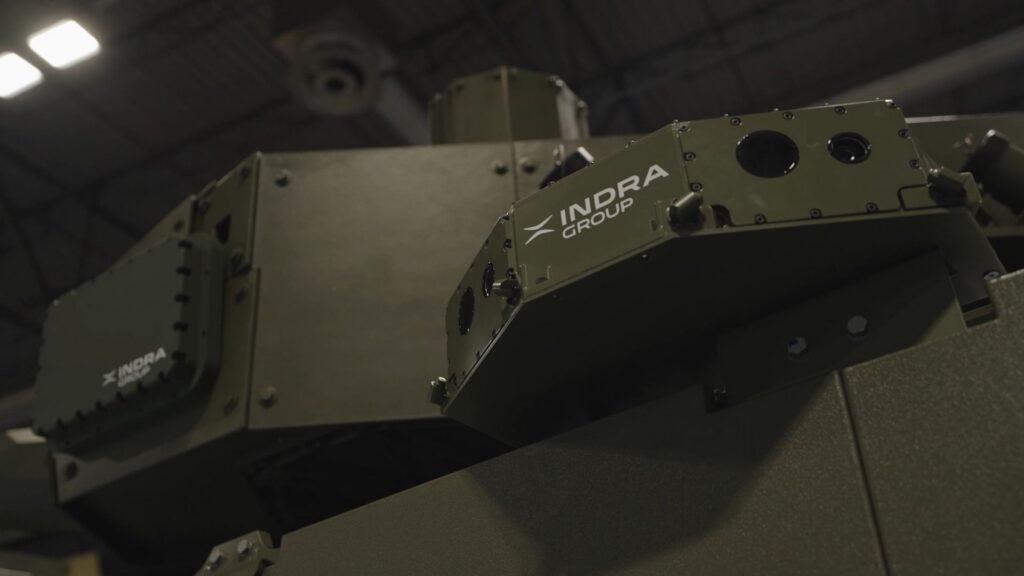
One of the most important features of the mission system is its ability to deliver comprehensive situational awareness around the vehicle. The system integrates visible-spectrum and thermal cameras distributed throughout the vehicle to provide a real-time 360-degree view, together with information from command and control systems, and even beyond the vehicle’s own line of sight through data or imagery received from other remotely operated land or aerial platforms.
This information can be displayed across different workstations and adapted according to mission requirements.
In the case of the 8x8 Dragón, the vehicle commander, gunner and driver can all access critical information from their respective positions. The system also incorporates workstation redundancy and role delegation capabilities, enabling specific functions to be assumed from different positions whenever operational circumstances require it.
The system also incorporates driving aids, threat management tools, diagnostics modules and communications management functions, creating a unified architecture that simplifies vehicle operation in volatile, uncertain and highly complex environments. All of this is delivered through an interface designed to be fast, intuitive and configurable, because in a combat scenario there is no room for complex menus or slow processes.
How does a combat vehicle coordinate with other units in real time?
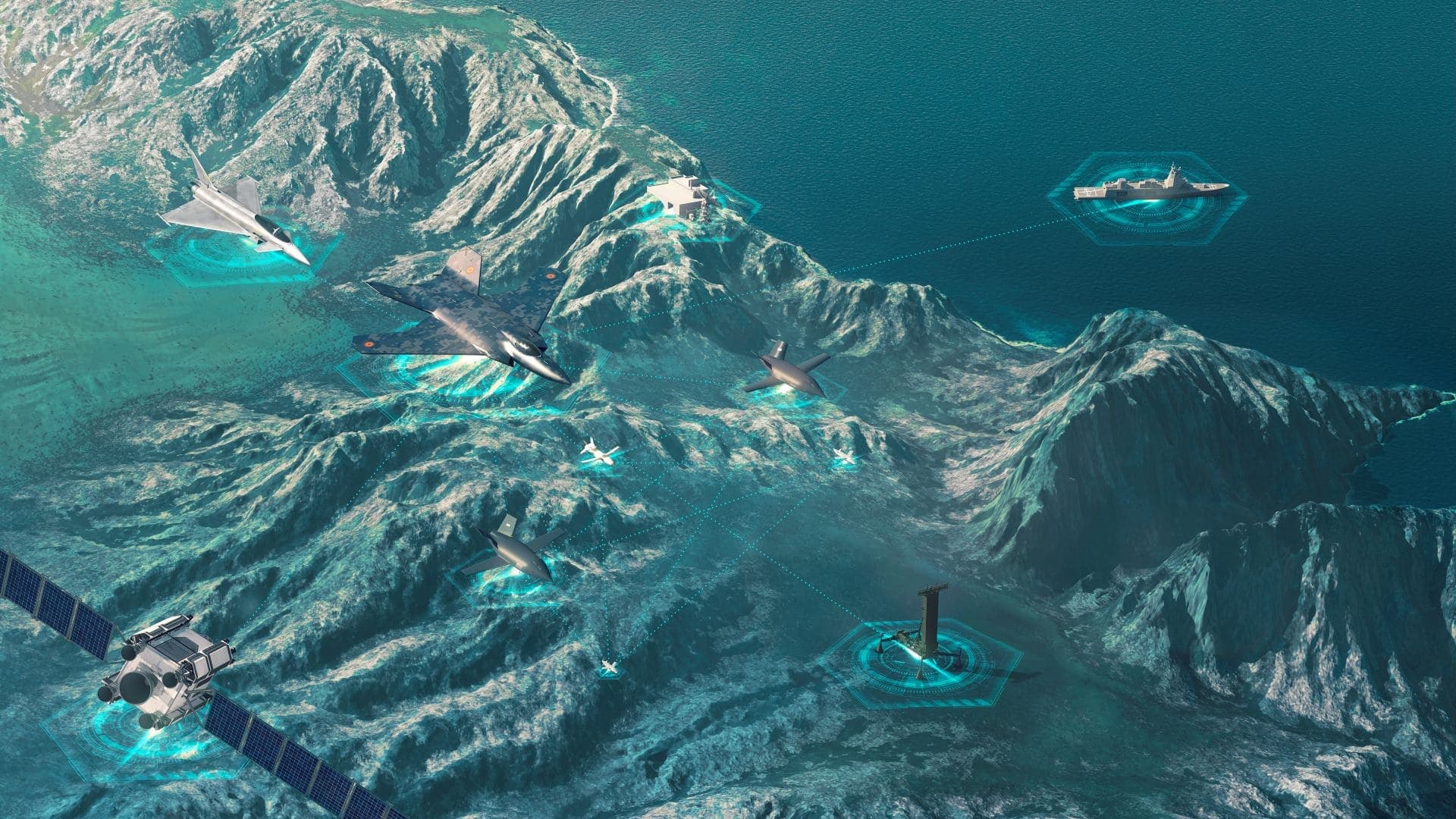
Today’s battlefield can no longer be understood as the isolated action of a single platform. Vehicles must constantly share information with other units in order to build a common understanding of the operational environment: they must fight as part of a network.
This is where the Battlefield Management System (BMS), integrated within the mission system, comes into play. Through digital mapping and continuous data updates, units can exchange positions, warnings, threats and tactical information in real time. This enables different vehicles to operate in a coordinated and collaborative manner, enhancing responsiveness and reducing decision times.
Ultimately, it provides a common operational picture that is unified, coordinated and continuously updated, where all deployed units have the ability to contribute information and validate it according to mission requirements.
The ultimate objective is to move towards a fully connected land force, integrated into combat cloud environments and prepared for the future Digital Combat Brigade of the Spanish Army. In this evolution, the mission system will play a critical role.
Continuously increasing situational awareness
The evolution of the 8x8 includes the progressive incorporation of new capabilities based on artificial intelligence tools, aimed at enhancing situational awareness, accelerating environmental interpretation and further improving decision-making.
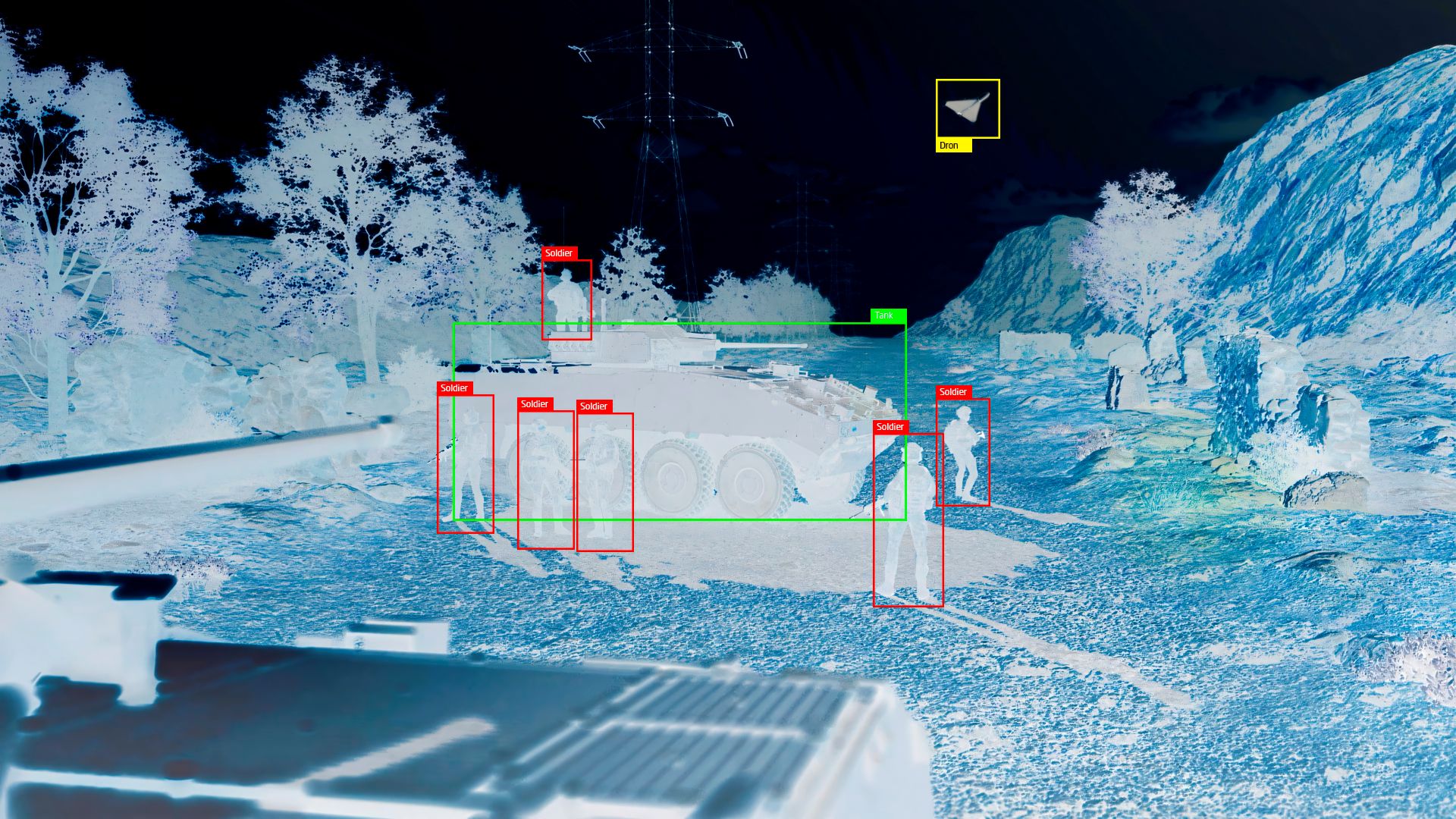
Within this context, the Local Situational Awareness System (LSAS) expands the capabilities of the mission system by enabling the identification and classification of elements close to the vehicle, such as personnel and other platforms, whether friendly or hostile. It provides continuous visibility of activity around the vehicle, helping detect potential threats. As a digital assistant, the mission system integrates this information with data from other sensors and systems in order to support the crew in making decisions based on a complete situational picture.
The mission system also continues to evolve through the integration of augmented reality tools designed to improve crew operational effectiveness. These capabilities enhance decision-making in the field by increasing the efficiency with which crews access, interpret and use tactical information.
A system in constant evolution
One of the most important aspects of the mission system is that it was conceived from the outset as an open system. The architecture developed by Indra enables its capabilities to be adapted to different platforms and incrementally upgraded with new sensors, communications systems and future technologies, providing a response to the demands of an ever-changing geopolitical environment.
This approach opens the door both to the modernisation of existing vehicles and to integration within new programmes.
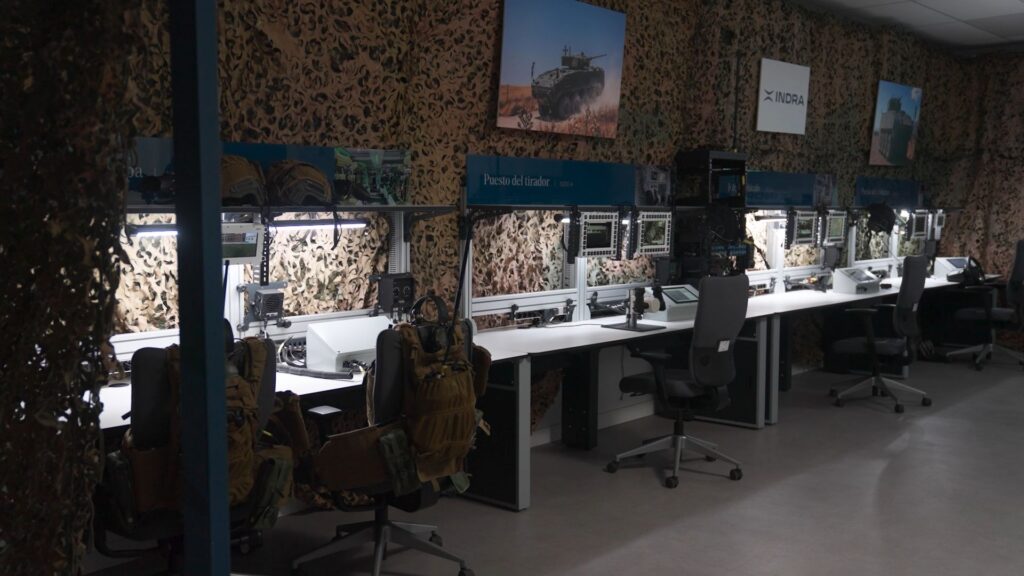
The company has also established an advanced laboratory that replicates both the vehicle and its operational environment, effectively creating a digital twin to continue developing and testing the system throughout its entire lifecycle. This environment makes it possible to analyse new configurations, validate interoperability and train crews before they operate the actual vehicles. In this way, we support the end user and help them adapt to the technological leap represented by this new family of advanced land systems and vehicles.
Integration with drones and other uncrewed systems (UXV)
Finally, another major step forward for both the 8x8 Dragón and the mission system is their integration with new uncrewed systems, such as the VECTOR UAV and the ALANO UGV. This further strengthens their ability to operate in increasingly complex collaborative environments and demonstrates that they are at the forefront of land vehicle technology, with advanced capabilities designed for future operations.
These developments were recently demonstrated during the Fuerza Futura TEC 3 exercises organised by the Spanish Army, where Indra had the opportunity to show that these advances are no longer merely a technological vision, but an operational reality demanded by modern armed forces. During the exercises, the mission system’s capabilities were also demonstrated before His Majesty King Felipe VI, senior Spanish Army officers and NATO representatives.
Mission System: The vehicle’s nerve centre
The evolution of these systems reflects the way modern combat vehicles are changing. Value no longer resides solely in the physical platform. Increasingly, it is the ability to integrate sensors, automate processes, share information and help operators make faster, better-informed decisions that matters most. For this reason, the mission system is no longer a secondary component. It has become the vehicle’s nerve centre, supporting the Armed Forces in the successful execution of critical operations.
The LSAS (Local Situational Awareness System) enhances the capabilities of the mission system by enabling the identification and classification of nearby elements around the vehicle, including personnel and other platforms, whether friendly or hostile. It provides continuous visibility of the vehicle’s surroundings, helping to detect potential threats.